Refrigerant Leak Repair in Austin, TX
We find AC refrigerant leaks and repair accessible coils, valves, and line sets.
A puddle beneath the hallway air handler and an AC that blows warm air can both get described as a refrigerant leak, but they point to different faults. Water around the indoor cabinet often comes from a blocked condensate drain, while a refrigerant leak usually shows up as longer cooling cycles, weak air from supply vents, or ice on the copper line. We check both sources rather than treating every wet floor or warm room as the same repair.
We start at the thermostat, indoor air handler, and outdoor condenser to see which part has changed. A clogged drain pan can send water across a ceiling or floor, while a leak at an evaporator coil, service valve, or line-set joint lowers the refrigerant charge that carries heat out of the house. We handle refrigerant leak checks and the water-related AC faults that can look similar from the hallway.
We cover Austin, Rollingwood, West Lake Hills, and Lost Creek from our location on W 10th St. A refrigerant leak should not wait because a low charge can freeze an evaporator coil and make the compressor run hotter than it should, while a condensate leak can keep wetting drywall, insulation, or flooring.
Warm vents and hissing
Warm air from the supply vents is one common call, especially when the thermostat stays set lower but the rooms never catch up. You may also hear a faint hissing sound near the indoor cabinet, outdoor condenser, or refrigerant line where copper tubing passes through a wall.
Ice on the larger insulated copper line or on the evaporator coil can point to a low refrigerant charge, although restricted airflow can create similar frost. Some homeowners notice the outdoor unit running for long stretches, short bursts of cool air followed by warmth, or a room that stays humid despite the blower running.
An oily mark around a service valve, coil bend, or line-set connection can also help us narrow the search, since refrigerant oil may collect at a slow leak point. Warm vents, ice, hissing, and water near the air handler can each lead to a different repair path and different repair cost, even when they look alike before we inspect the equipment.
Leak detection callout
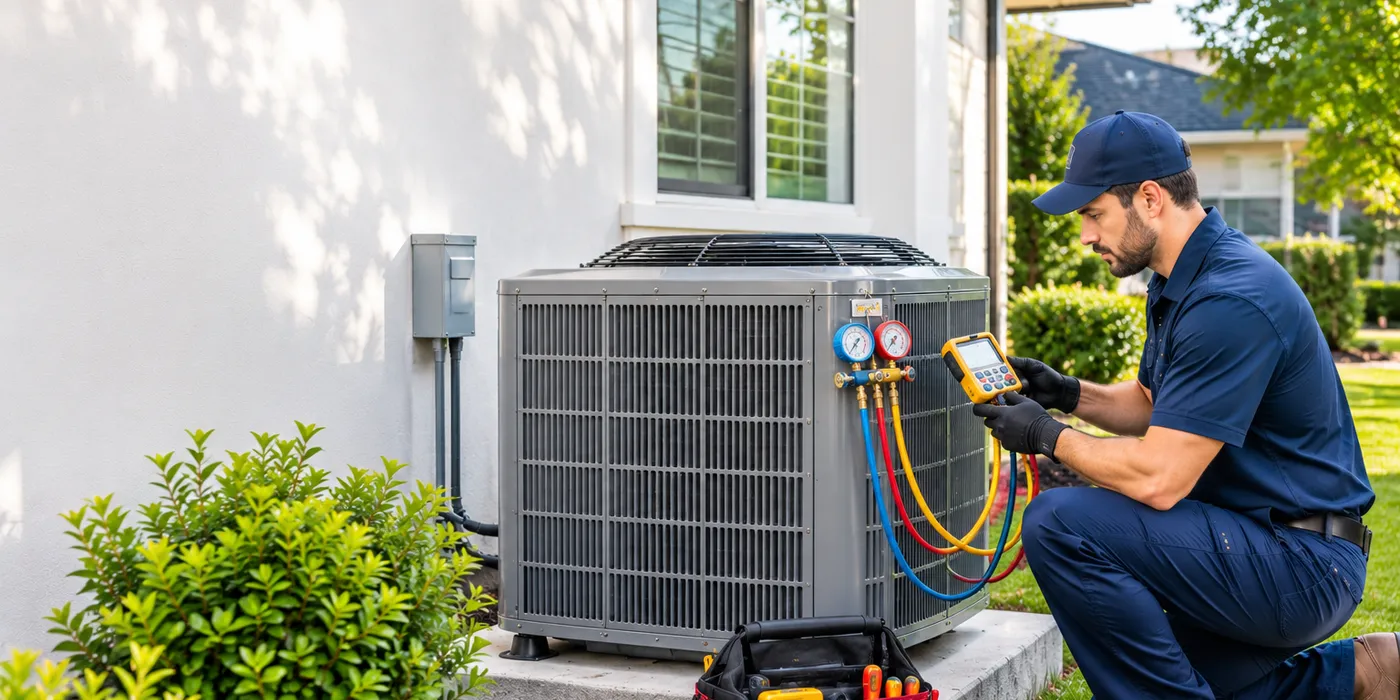
We begin the callout by checking the thermostat setting, air filter, blower operation, drain pan, refrigerant line temperature, and visible coil surfaces. We connect gauges at the service ports, record suction and liquid pressures, and compare those readings with the charging method listed for the equipment. An initial measurement and accessible leak check commonly takes about thirty to sixty minutes, depending on attic access, cabinet panels, and the amount of ice on the coil.
After recovering refrigerant where needed, we inspect service valves, Schrader cores, brazed joints, flare fittings, the evaporator coil, and the condenser coil with an electronic leak detector, soap solution, or nitrogen pressure test. We can often replace an accessible valve core, cap, O-ring, or reachable line connection during the same callout when the correct material is available. Once the repair holds, we evacuate the refrigerant circuit below five hundred microns and recharge by the equipment label and manufacturer procedure.
A concealed line set inside a wall, a badly corroded evaporator coil, or a coil that must be ordered usually needs another visit after we identify the failed part. We explain where the leak sits, what we tested, and whether the compressor and coil can return to normal operation after the charge is restored.
Coil access and line set
The location of the leak changes the work involved. A service valve on the outdoor condenser can be reached after removing a panel, while an evaporator coil behind an air-handler cabinet or furnace plenum may require a larger strip-back and careful reassembly of sheet metal, insulation, and drain piping.
Equipment age also matters because older coils can develop corrosion across several tube bends instead of failing at one visible joint. A service valve that has seized, a damaged access port, or a brittle insulation sleeve can add work before we can test and seal the refrigerant circuit correctly.
Factory-specific evaporator coils, condenser coils, and line-set fittings sometimes have to be ordered to match the model and refrigerant type on the data plate. Gated properties, attic hatches, condominium rules, and building access approval can also affect the scope when the outdoor unit or indoor cabinet sits behind restricted access.
Model plate and air handler
Before you call, we can use the model and serial number from the data plate on the outdoor condenser or indoor air handler. Tell us which room has warm vents, where you saw water or ice, and whether the thermostat still starts the blower and outdoor unit. Let us know if the copper line runs through an attic, crawlspace, wall, or ceiling so we can plan access to the suspected connection. If you know when the air conditioner was installed or when refrigerant was last added, that can help us judge whether the coil or line set needs closer testing. Keep pets, storage boxes, and furniture clear of the condenser panel and air-handler door where possible. Call Air Conditioning Services Austin at (737) 300-9206, because continued low refrigerant can overheat the compressor and turn a leak repair into a larger equipment repair.
When we are open
Outside these hours, leave a message and we will call back.
Next: ductless mini-split repair, or back to the home page.